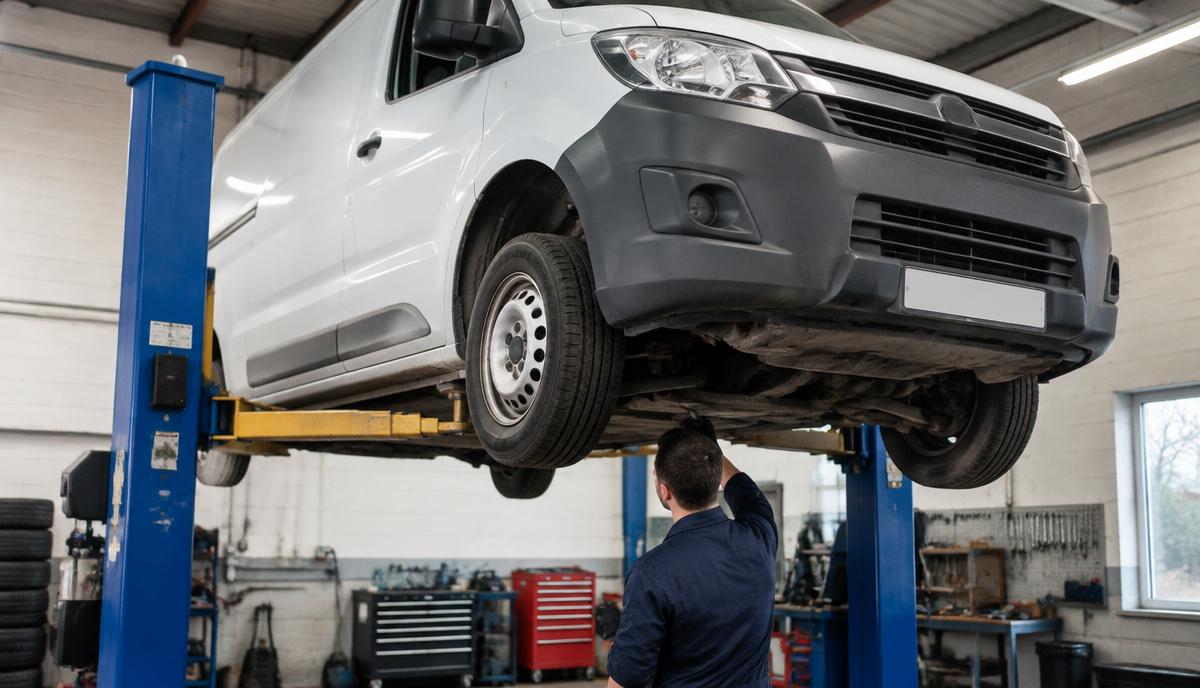
For a business, a van off the road means missed jobs. Understanding what an MOT covers, what a service covers, and the extra strain working vans are under helps you plan maintenance and avoid surprises.
Van MOT classes
Most light commercial vans up to 3,000kg design gross weight take a Class 4 MOT, the same class as cars. Vans between 3,000kg and 3,500kg take a Class 7 MOT. The design gross weight is shown on the vehicle's plate, usually in the door shut or under the bonnet. Not every test centre is approved for Class 7, so check when booking.
What the MOT checks on a van
The checks follow the same areas as a car: lights, brakes, tyres, steering and suspension, body and structure, seatbelts, visibility, emissions, the horn, plates and VIN. For vans, testers pay close attention to load-bearing areas, the security of the body and doors, and the condition of the load area where it affects structure. See our full guide to what the MOT checks.
What a van service covers
- Engine oil and filter change, with fuel, air and cabin filters at their intervals
- Brake inspection, with pad and disc measurement front and rear
- Tyre condition and pressures, including load-rated pressures if the van carries heavy loads
- Steering and suspension joints, springs and shock absorbers
- Clutch operation, driveshafts and CV boots
- Cooling system, auxiliary belt and fluid levels, including AdBlue where fitted
- Lights, wipers, battery and charging system
- Diagnostic scan for stored faults, including DPF and emissions systems
Mechanical checks that matter most for working vans
Brakes and tyres
Heavier loads mean more work for brakes and more stress on tyres. Rear brakes on vans often wear faster than on cars because of the load, and tyres must be the correct load rating.
Suspension
Rear leaf or coil springs and their mountings can break or sag with repeated heavy loads. Broken springs are a common MOT failure on vans.
Clutch and dual mass flywheel
Stop-start delivery work, heavy loads and towing all wear the clutch. Our clutch guide explains the warning signs.
DPF, EGR and AdBlue
Short urban trips stop the diesel particulate filter regenerating properly. Warning lights for the DPF, AdBlue or engine should be investigated quickly before the van goes into limp mode. Our diagnostics service reads and explains these faults.
Which should you do first?
If both are due around the same time, a service before the MOT is usually the better order. The service finds worn brakes, bulbs, wipers and tyres, which can be fixed before the test, cutting the chance of a fail and a retest. Booking them together at the same garage also means one trip and less downtime.
Keeping a fleet compliant
If you run several vehicles, see our fleet servicing page.
- Keep a simple calendar of MOT due dates (available free from the GOV.UK MOT history service) and service intervals for each vehicle
- Ask drivers to do quick daily walk-round checks of lights, tyres and fluid levels
- Act on MOT advisories before they become failures
- Keep service records for warranty and resale value
Frequently asked questions
Need your van serviced and MOT'd with minimal downtime? Book both together online.
Book a van service