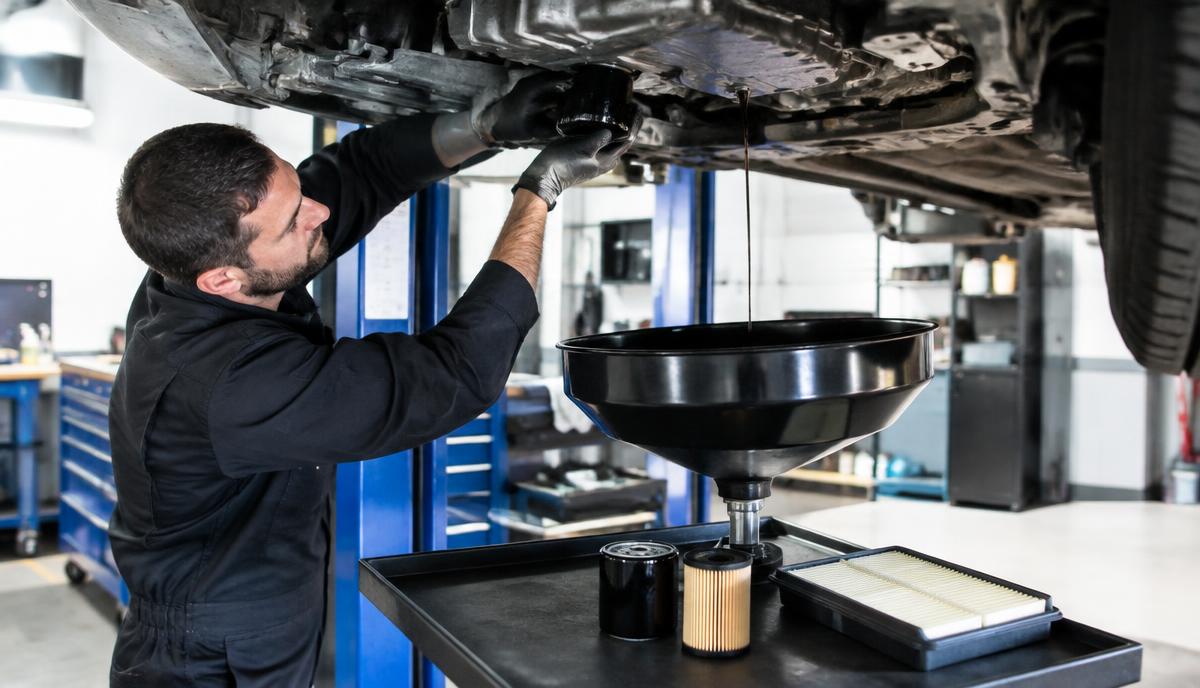
Servicing is the single most effective way to keep a car reliable and avoid large repair bills. Oil breaks down, filters clog and wear items wear out gradually, usually without obvious symptoms until something fails.
Below is what each level of service typically covers, how to tell which your car needs, and the checks you can do between services.
Interim, full and major services
Please note: replacing spark plugs, fuel filters, brake fluid and coolant is not included in the Major Service price. We test these during the service and give you a separate quote if your car needs them.
The exact list should follow your manufacturer's schedule. See our current car servicing prices.
Interim service
Ideal for higher-mileage drivers between full services. Typically includes:
- Engine oil and oil filter change
- Check and top up brake, coolant, power steering and screen wash fluids
- Tyre tread, condition and pressures
- Lights, horn, wipers and washers
- Visual check of brakes, steering, suspension and exhaust
Full service
Recommended every 12 months or 12,000 miles for most cars. Everything in an interim service, plus:
- Air filter replacement
- Pad and disc measurement on all wheels, and brake operation checks
- Steering and suspension joints, bushes, shock absorbers and springs
- Auxiliary drive belt, hoses and visible cambelt condition where accessible
- Battery test and charging system check
- Driveshaft gaiters, exhaust and underbody inspection
- Diagnostic scan and service indicator reset
Major service
Usually every second year or 24,000 miles. Everything in a full service, plus items such as:
- Cabin (pollen) filter replacement
- Extended mechanical, electrical and safety checks
- Brake fluid condition and moisture test
- Coolant strength, condition and freeze-protection test
- Spark plug and fuel filter condition check (where accessible)
How to know which service your car needs
- Check the service indicator on the dashboard, which may show a mileage or time remaining
- Look at the service book or digital service record for what was done last time
- Follow the manufacturer's schedule for items such as cambelt, spark plugs and brake fluid
- If you drive a lot of miles, mainly short trips, tow or drive in heavy traffic, consider an interim service between full ones
Why regular servicing saves money
- Fresh oil protects the engine, turbo and timing chain from wear
- Worn brakes, tyres and suspension are found before they damage other parts
- Small leaks are fixed before they become big repairs
- A full history supports resale value and warranty claims
- Fewer surprises at MOT time
Warning signs your car needs attention now
Don't wait for the next service if you notice:
- Warning lights on the dashboard, especially red ones
- Grinding, squealing or knocking noises
- Vibration, pulling or changes in how the brakes feel
- Smoke from the exhaust or a burning smell
- Fluid leaks under the car
- Loss of power or rough running
- Any of the above: a diagnostic check is the fastest way to find out what is wrong
Checks you can do between services
- Engine oil level on the dipstick or dashboard, monthly
- Coolant level in the expansion tank, with the engine cold
- Tyre pressures and tread, including the spare if fitted
- Screen wash level and wiper blade condition
- All lights working
Frequently asked questions
Due a service? Enter your registration for an instant price and pick a date online.
Book a service