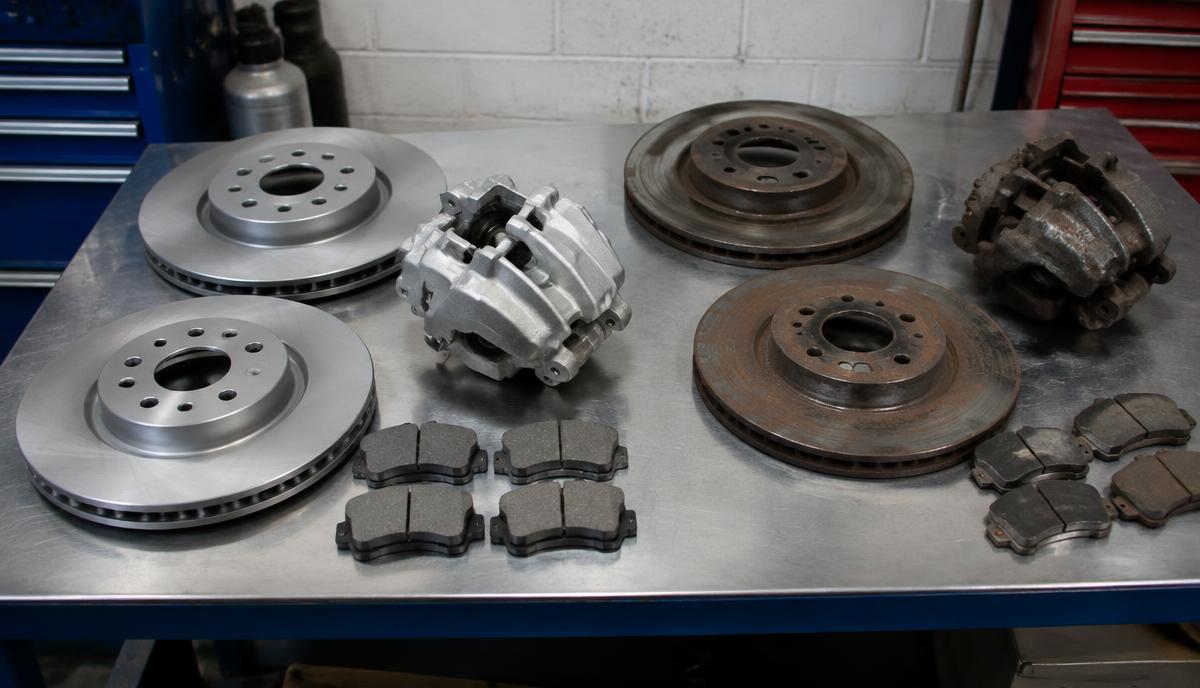
Brake prices can vary widely between two quotes for what sounds like the same job. Usually that's because the quotes include different parts, different part quality or different amounts of labour. Knowing what goes into a brake job helps you compare quotes properly.
The main brake components
Brake pads
Friction pads that clamp the disc. They're designed to wear and are replaced in axle sets.
Brake discs
The metal rotors the pads grip. They wear more slowly and have a minimum thickness. Most front discs are ventilated to shed heat; performance cars may have drilled or grooved discs.
Calipers
Hold the pads and push them against the disc using hydraulic pistons. They can seize, stick or leak, particularly on cars that sit unused or in salty winter conditions.
Drum brakes
Some smaller cars use drums at the rear, with shoes that press outwards inside a drum. They last a long time but need inspection and adjustment.
Hoses, pipes and fluid
Carry hydraulic pressure. Rubber hoses perish; steel pipes corrode. Brake fluid absorbs water and needs periodic replacement.
Electronic parking brake
Many modern cars have a motor on the rear calipers. Changing rear pads needs diagnostic equipment to wind the pistons back safely.
What affects the price
- Which parts are needed: pads only, pads and discs, or calipers and hoses as well
- Front or rear axle, and whether the rear has an electronic parking brake
- Vehicle type: larger, heavier and performance cars use bigger, more expensive parts
- Part quality: budget, quality aftermarket or original equipment
- Extras such as wear sensors, which are often single-use
- Seized or corroded fixings that add labour
Why waiting costs more
Pads that wear down to the metal backing plate score the discs, turning a pad-only job into pads and discs. A seized caliper left alone overheats the disc and pads on that wheel. Catching wear early is the cheapest option. Our guide to brake warning signs explains what to look and listen for.
Safe ways to keep brake costs down
What not to do: cut corners on brake parts or delay repairs on a car that's grinding, pulling or has a soft pedal.
- Have the brakes measured at every service so you can plan replacements
- Act on the first squeal from the wear indicator
- Drive smoothly and anticipate stops; harsh braking wears pads faster
- Use quality parts that meet the original specification rather than the cheapest available
- Change brake fluid at the recommended interval to protect calipers and the ABS unit
- Ask for a clear itemised quote showing parts and labour
Getting an accurate quote
Because prices depend on the exact parts for your vehicle, the most accurate quote comes from your registration and an inspection. Contact us or book a check and we'll measure everything and tell you what's needed now and what can wait.
Frequently asked questions
Want to know exactly what your brakes need? We'll inspect them and give you an itemised quote before any work.
Book a brake check